Since 1906, nearly every reader of Mah Laqa Bai Chanda has met her through one printed text, Gulzar-e-Mah Laqa (GM). This page tests that text against the three manuscripts that survive from her lifetime, using couplet-level string distance, a phylogenetic network, and a word-level measure of how Dakhni vocabulary was handled. The full argument is in the paper Quantifying Corruption (doi:10.17613/yq3e6-4pc82). The variant apparatus and restored text are in the critical edition Deewan-e-Chanda, self-published open access on Knowledge Commons (doi:10.17613/phn4x-q9342). The collation data is archived at doi:10.5281/zenodo.20587113.
How the Comparison Works
BL (1799), TO (1811) and SJ (1818) are the lifetime manuscripts and GM is the 1906 print; see The Witnesses for each. Every witness was transcribed in full and aligned couplet by couplet (125 ghazals × 5 couplets = 625 positions, cited as ghazal.couplet, for example 5.4). Scribal spelling conventions were standardised; differences in vocabulary, morphology and syntax were kept exactly as written.
- Distance. Each pair of couplets is scored with normalised Levenshtein distance: the fewest single-character edits needed to turn one into the other, divided by the length of the longer. Scores run from 0 (identical) to 1.
- "Major" change. Rather than choose a cut-off by hand, the threshold is the 95th percentile of distances across the two manuscript-to-manuscript transitions (about 0.043). By construction, 95% of ordinary copying drift and authorial adjustment falls below it.
- Network. The averaged distances between witnesses feed the NeighborNet algorithm in SplitsTree4, which draws conflicting signals as boxes instead of forcing a tree.
- Dakhni Retention Rate. A tracked word is followed through the tradition to see whether it survives at the same position in the next witness.
The DRR formula
100% means the form passed through untouched; 0% means it was removed or replaced every time. The tracked words are a hand-picked list of distinctively Dakhni forms.
How Much Changed, and When
Comparing consecutive witnesses shows two very different kinds of change. Across the manuscripts, most couplets pass from one copy to the next unaltered, and the share of heavily altered couplets is small. Between SJ and the print, it flips: only about a quarter of couplets survive untouched, and half are substantially rewritten.
These figures cover couplets present in both witnesses of each pair. Ghazals found in only some witnesses are treated separately in the critical edition.
The Phylogenetic Network
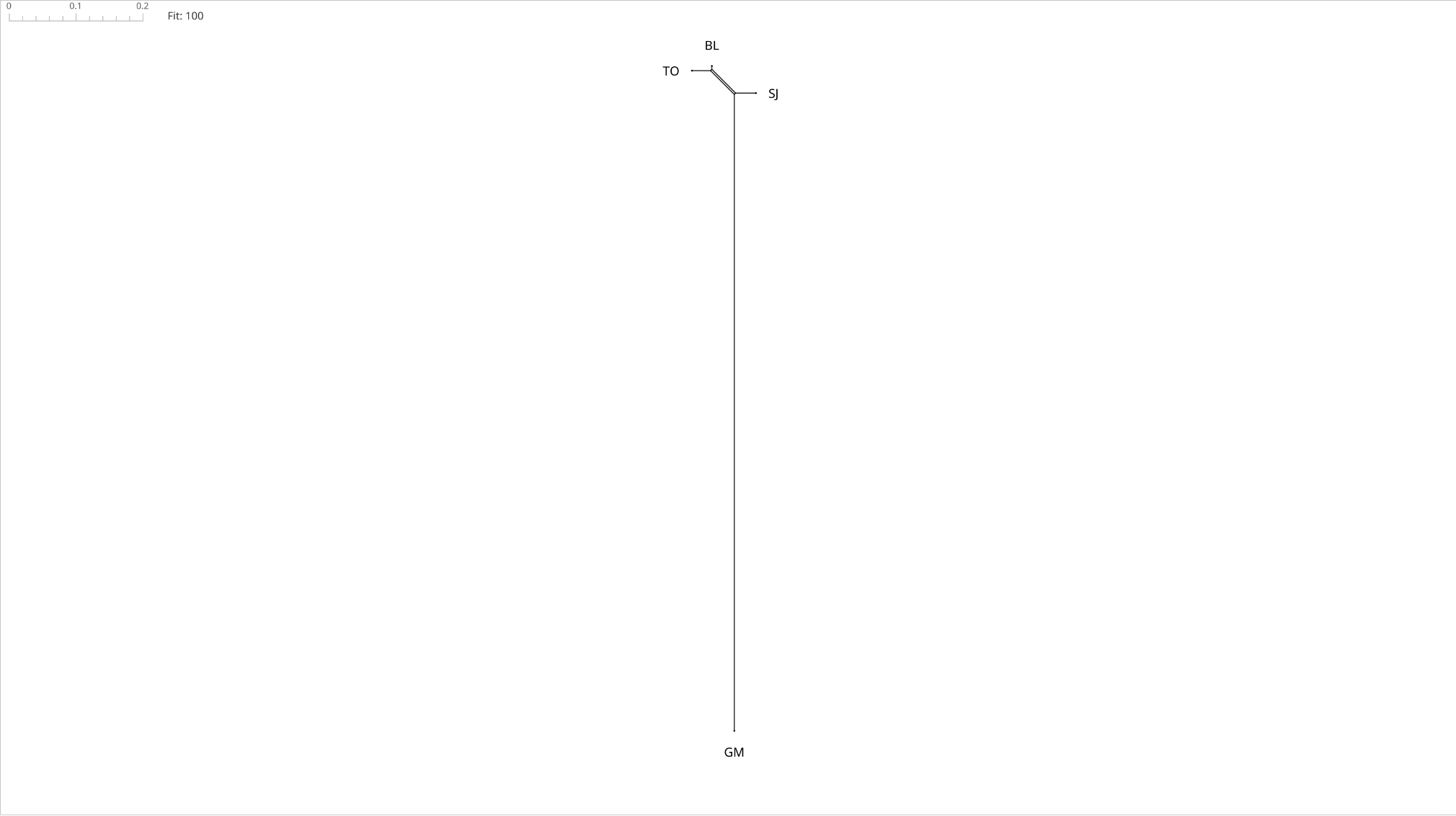
A NeighborNet turns the distance matrix into a picture: witnesses that sit close together in the text sit close together on the page, and the scale bar shows how far apart "far" is.
Figure 1: the manuscripts alone
With GM left out, BL, TO and SJ spread across a scale of about 0.016. This is the whole range of variation in the lifetime tradition.
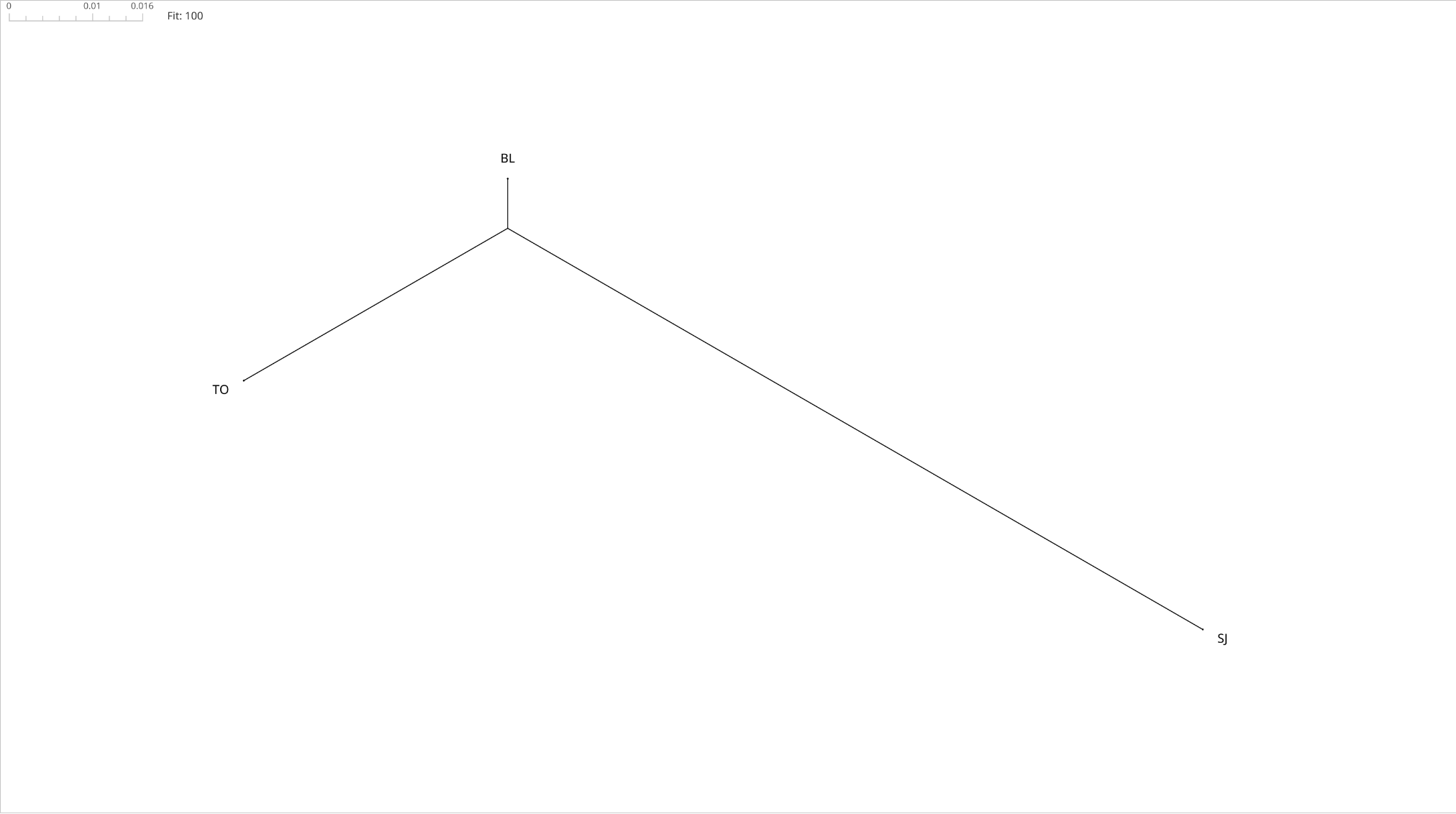
Figure 2: adding the 1906 print
Add GM and the scale has to stretch to about 0.2, roughly twelve times wider. BL, TO and SJ shrink into a single small cluster, and GM hangs from its own long branch.
Reading the shapes
- The small box near BL and TO. NeighborNet draws a parallelogram when the data supports two groupings that cannot both fit in one tree. Here, one signal groups BL and TO together against SJ and GM; the other links SJ with BL or TO. In plain terms, the manuscripts are very close and do not divide neatly.
- The long branch. Length is the amount of text difference. GM's branch is far longer than anything separating the manuscripts.
- Fit = 100. The flat drawing reproduces the distance matrix exactly, so the isolation of GM is not an artefact of squeezing the data into two dimensions. With only four witnesses a perfect fit is to be expected, so it is a check on the picture and not extra evidence; the evidence is the distances themselves.
Shared Errors: Why GM Descends from SJ
The numbers show that GM is far from the manuscripts. Classical textual criticism shows where it comes from. Two copies rarely make the same mistake independently, so shared mistakes point to common descent. SJ and GM share several, and BL and TO, which have the right readings, do not.
The same 125 ghazals
The Salar Jung catalogue gives SJ 123 ghazals, which is wrong: it has 125. GM has the same 125, in emended form. Not one ghazal in GM lacks a source in SJ.
A dropped word: couplet 89.4
BL and TO give the line in sound metre. SJ drops vo (وہ), which leaves the line out of metre. Gauhar changed the verb to badlīñ haiñ, but never restored vo, so GM's line is out of metre in the same place.
BL and TO
نظریں وہ بدلے ہے بے طرح گراں خاطر ہو
یوں فلک کب تھے سبک یار کی ہم آنکھوں میں
SJ (1818)
نظریں بدلی ہے بے طرح گراں خاطر ہو
یوں فلک کب تھے سبک یار کی ہم آنکھوں میں
GM (1906)
نظریں بدلیں ہیں بے طرح گراں خاطر ہو
یوں فلک کب تھے سبک یار کی ہم آنکھوں میں
A slip of the pen: couplet 70.3
BL and TO read mazā (pleasure, savour), which the couplet requires. SJ writes mirā by mistake, and GM copies it.
BL and TO (1799, 1811)
کل زور تھا مزا صف عشاق میں ترے
قدموں پہ سر رکھے تھا کوئی روبروئے تیغ
SJ and GM (1818, 1906)
کل زور تھا مرا صف عشاق میں ترے
قدموں پہ سر رکھے تھا کوئی روبروئے تیغ
Muñh or mah? Couplet 5.4
SJ's scribe often drops the internal ghunna, so muñh (face) appears as مہ, the same spelling as mah (moon). In 5.4 the context allows only muñh. Gauhar read the spelling literally and printed mah.
BL, TO, SJ
جس وقت دیکھا منہ کو تو ناچار ہی رہا
GM (1906)
جس وقت دیکھا مہ کو تو ناچار ہی رہا
A missing word and a new couplet: 120.2
Here SJ has mah for muñh and also lacks a word in the first line (tō, shown in square brackets as restored). Gauhar tried to repair the damage by replacing the whole couplet with a new one on a different image.
BL and TO
باغباں جور خزاں سے ہو تو یک لخت خموش
منہ کو بلبل بھی رگ گل سے سئے بیٹھی ہے
SJ (1818)
باغباں جور خزاں سے ہو [تو] یک لخت خموش
مہ کو بلبل بھی رگ گل سے سئے بیٹھی ہے
GM (1906)
کبھی صیاد کا کھٹکا ہے کبھی خوف خزاں
بلبل اب جان ہتھیلی پہ لئے بیٹھی ہے
The Ranbha Ghazal: A Missing Radeef
SJ is arranged by radeef, but six panegyrics to the Nizam and other nobles sit out of order, just before the last ghazal of the ی section. One of them honours her patron, Raja Rao Ranbha Bahadur, and uses his name as its radeef.
The scribe wrote this ghazal in a way found nowhere else in the manuscript. The radeef is written out in both lines of the matla. In the later couplets the scribe left a blank where it belongs, and the reader supplies the name from the matla. The poem reads without difficulty. Gauhar, however, saw the missing radeef, took the text to be defective, and rewrote it. The radeef was dropped, a new metre was chosen, and in effect a new ghazal was composed. Rao Ranbha's name is gone.
SJ 1818: opening couplet
جوں عمر خضر کا ہو اجمال راؤ رنبھا
تیری گرہ ہو ایسی ہر سال راؤ رنبھا
GM 1906: opening couplet
ہو تری عمر خضر ماہ جمال
یوں ہی تیری گرہ ہو سال بہ سال
SJ 1818: closing couplet
چندا کی ہے تمنا سرکار مرتضیٰ سے
دونوں جہاں کا پاوے تو مال [راؤ رنبھا]
GM 1906: closing couplet
عرض سرکار مرتضیٰ میں یہ ہے
پائے دونوں جہاں کا چندا مال
Square brackets mark the radeef restored where SJ leaves its blank.
The rewrite also changed the poem's meaning. In SJ it is clear that the generosity surpassing Hatim's is Rao Ranbha's. GM's version has no subject at all, which leaves that comparison hanging, and Sameena Shaukat, working from GM, took the ghazal to concern Mah Laqa Bai's own birthday. Computational alignment ranks it as the most heavily altered ghazal in the corpus.
What Happened to the Dakhni Voice
For a century, scholars have taken the northern polish of the printed text to be the poet's own, a deliberate move away from Dakhni to suit the Asaf Jahi court. Scott Kugle's reading of her revisions rests on this assumption, reasonably so, given that GM was the only text anyone had. The manuscripts show something different: her Dakhni never changed. What changed was the text, in 1906.
Five markers, tracked through the tradition
Each form below stays steady through the lifetime manuscripts, then collapses in print.
| Dakhni form | Standard Urdu | BL → TO | TO → SJ | SJ → GM (print) |
|---|---|---|---|---|
| کسو | کسی | 100.0% | 100.0% | 0.0% |
| نئیں | نہیں | 100.0% | 88.0% | 0.0% |
| جیوں | جیسے / جس طرح | 100.0% | 100.0% | 0.0% |
| نت | ہمیشہ / روز | 100.0% | 90.0% | 8.3% |
| کبھو | کبھی | 100.0% | 93.8% | 16.7% |
کبھو survives partly, most likely because it passes as an acceptable archaism in the northern classical tradition. The others were removed almost without exception. That pattern points to a systematic programme and not to a copyist's carelessness.
Why one word becomes a whole new couplet
A Dakhni word in the qafia, the rhyming word, cannot be swapped alone. The replacement means something different, so the lines built around it have to change too. In the first example below, the Dakhni کسو (kisū) is also replaced by کسی (kisī).
BL, TO, SJ
پھر کاہے کو اس طرح کیا شیفتہ اپنا
منظور نہ تھی تجھ کو جو نرباہ کسو کی
GM (1906)
بوسہ بھی کوئی مانگے تو دے جان کے خیرات
خاطر کو نہ رنجیدہ کر اے ماہ کسی کی
BL, TO, SJ
نہیں اس کی بد وضعی کچھ آج کل سے
یوں ہی ہم تو سارا جنم دیکھتے ہیں
GM (1906)
نہیں تیری آتی ہے اک بات ان میں
حسینوں کو تیری قسم دیکھتے ہیں
The qafia changes from nirbāh (from Sanskrit nirvāha) to māh, and from janam to qasam. The rhyme sound survives, but every other word in both couplets is different. Many of the large distances in the "Major" column are rewrites like these, not independent stylistic choices.
The compressed koī
Early Deccani poets sometimes scanned کوئی (koī) as a single long syllable. Mah Laqa Bai does this in nine couplets, transcribed کوی in the collation data. Gauhar took it for bad metre and changed the line in all nine. Sometimes the change is one word:
BL, TO, SJ: couplet 41.1
کوی دن کرے صیاد کو اللہ جو مرا صید
کر دوں میں سبھی دام سے اک دم میں رہا صید
GM (1906)
کچھ دن کرے صیاد کو اللہ جو مرا صید
کر دوں میں سبھی دام سے یک دم میں رہا صید
BL, TO, SJ: couplet 101.5
دیکھ کہتے ہیں یہ چندا کو موالی علی
حیدرآباد میں کوی اہل وفا رہتا ہے
GM (1906)
دیکھ کہتے ہیں یہ چندا کو موالی علی
حیدرآباد میں اک اہل وفا رہتا ہے
In the other seven couplets the repair is larger: words reordered, syntax recast, or a whole line rebuilt to avoid the word.
Not an isolated case
The same thing happened to Wali Dakhni. In his critical edition of the Kulliyat-e-Wali (1989), Noor-ul-Hasan Hashmi describes how the Nawalkishori and Sayyani editions modernised Wali's language and orthography without saying so, and calls it a grave error. It was a pattern of the early print industry, and how many other Deccani texts still await collation against their manuscripts is an open question.